A Review Article on Upgrading Shortest Path Problems
DOI:
https://doi.org/10.31033/ijemr.13.3.31Keywords:
Bellman-Ford Algorithm, Dijkstra Algorithm, Floyd–Warshall Algorithm, Genetic AlgorithmAbstract
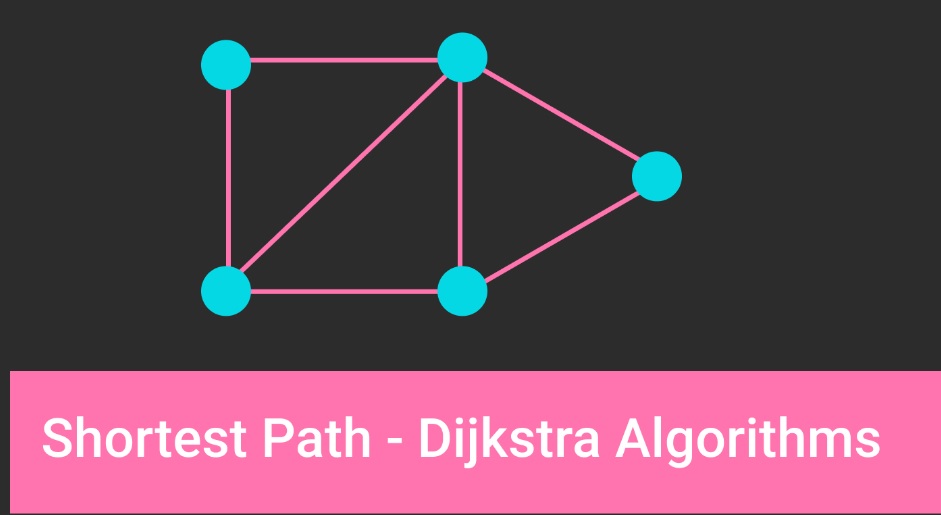
The shortest path algorithm determines the shortest distance between the source and the destination.To solve the shortest path problem, we use a graph. Graph isa abstract notation used to represent the connection between pairs of object.A graph has vertices and edges.Vertex is a node of graph.A graph edge connects one or more graph vertex. Both directed and undirected graphs exist. The formal definition of a graph is a pair of sets, V and E, where V is the set of vertices and E is the set of edges that link the pairs of vertices. Edges in undirected graphs are those without a direction. Each edge can be crossed in both directions, which indicates a two-way link. Edges in directed graphs have a direction. Since each edge can only be crossed once, the edges signify a one-way relationship.Wight, which is used to determine the shortest path from, is contained in edges.from a source to a destination.Think about several maps of airline routes. A direct flight from the airport represented by vertex A to the airport represented by vertex B creates an edge between the two.B's airport is represented. Different shortest path algorithms exist to address the shortest path issue. They are the Genetic Algorithm, Dijkstra's, Floyd-Warshall, Bellman Ford, and algorithms.
Downloads
Downloads
Published
How to Cite
Issue
Section
License
Copyright (c) 2023 Shra Fatima, Kamlesh Chandra Maurya

This work is licensed under a Creative Commons Attribution 4.0 International License.
Research Articles in 'International Journal of Engineering and Management Research' are Open Access articles published under the Creative Commons CC BY License Creative Commons Attribution 4.0 International License http://creativecommons.org/licenses/by/4.0/. This license allows you to share – copy and redistribute the material in any medium or format. Adapt – remix, transform, and build upon the material for any purpose, even commercially.