Machine Learning Algorithms: Optimizing Efficiency in AI Applications
DOI:
https://doi.org/10.5281/zenodo.14005017Keywords:
Guided Learning, Uncontrolled Learning, Reinforcement Learning, Artificial Intelligence, Machine LearningAbstract
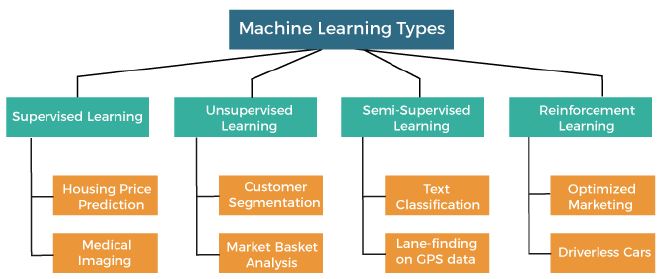
Machine learning (ML) is an AI technology that creates programs and data models that can perform tasks without being instructed. It has three major types: guided learning, uncontrolled learning, and reinforcement learning. ML is essential for big projects like real-time decision-making systems and self-driving cars, robots, and drones. It improves AI systems by making it easier to create models, work with data, and run algorithms. ML algorithms have different types of learning, require different amounts of data and training times, and can be improved by tuning hyperparameters. Techniques like feature selection, dimensionality reduction, model editing, and compression can improve performance and accuracy in various fields. In the real world, making AI apps more efficient can lead to more options, lower prices, and faster processing. Key techniques like model compression, transfer learning, and edge computing are needed to achieve these goals.
Downloads
Downloads
Published
How to Cite
Issue
Section
License
Copyright (c) 2024 Balkrishna Rasiklal Yadav

This work is licensed under a Creative Commons Attribution 4.0 International License.
Research Articles in 'International Journal of Engineering and Management Research' are Open Access articles published under the Creative Commons CC BY License Creative Commons Attribution 4.0 International License http://creativecommons.org/licenses/by/4.0/. This license allows you to share – copy and redistribute the material in any medium or format. Adapt – remix, transform, and build upon the material for any purpose, even commercially.