The study on Organizational Structure and demographic profile of Farmer Producer Organisations (FPOs): A Case Study from Himachal Pradesh
DOI:
https://doi.org/10.5281/zenodo.14974345Keywords:
Farmer Producer Organizations (FPOs), Organizational Structure, Governance, Collective Marketing, Agriculture, Himachal PradeshAbstract
This study examines the organizational structure and functioning of Farmer Producer Organizations (FPOs) in Himachal Pradesh, with a focus on their role in improving farmers’ market access, profitability, and operational efficiency. The research was conducted in four districts—Shimla, Solan, Sirmour, and Kinnaur—where commercial fruit and vegetable farming is dominant. Seven FPOs were selected based on their engagement in fruit and vegetable cultivation and their resource support agencies, either Small Farmers’ Agri-Business Consortium (SFAC) or Himachal Pradesh Horticulture Development Project (HPHDP).
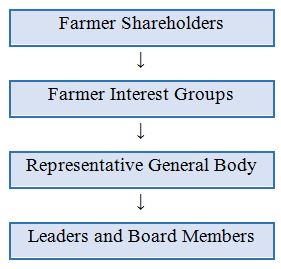
Findings reveal that the FPOs operate within a four-tier organizational structure comprising farmer shareholders, farmers' interest groups, a representative general body, and board members. The key objectives of these FPOs include collective procurement, technological advancement, price enhancement, advisory services, training, and improved access to agricultural inputs and markets. Their primary functions span collective marketing, sorting, grading, packaging, transportation, and exposure visits. While some FPOs actively pursue technological advancements and improved market access, others are confined to specific objectives.
The study suggests strengthening governance mechanisms and providing a simplified administrative framework to enhance the effectiveness of FPOs. Additionally, expanding the research to other districts and states can offer deeper insights for policy formulation and improving the sustainability of FPOs.
Downloads
References
Anika Trebbin, & Markus Hassler. (2012). Farmers' producer companies in India: A new concept for collective action?. Environment and Planning, 44(2), 411-427.
Birthal Pratap, HazranaJaweriah, & Negi Digvijay. (2021). Adaptation potential of farmers’ own risk management strategies in smallholder agriculture: Some evidence from India. DOI: 10.21203/rs.3.rs-393109/v1.
Chandan Kumar Panda, & Siya Ram Singh. (2016). Role of extension in leveraging FPOs for small and marginal farmers. International Journal of Farm Sciences, 6(1), 243-254.
Hofstede, G., Neuijen, B., Ohayv, D. D., & Sanders, G. (1990). Measuring organizational cultures: A qualitative and quantitative study across twenty cases. Administrative Science Quarterly, 286-316.
Joseph Edward Champoux. (2011). Organisational behaviour: Integrating individuals, groups, and organisation. Routledge, 0415804639.
Kumar, K.N.R., Reddy, M.J.M., & Shafiwu, A.B., et al. (2023). Impact of farmer producer organizations on price and poverty alleviation of smallholder dry chillies farmers in India. Research on World Agricultural Economy, 4(3), 880.
Ledimo, O. (2015). Diversity management: An organisational culture audit to determine individual differences. Journal of Applied Business Research (JABR), 31(5), 1733-1746.
Markelova Helen, Meinzen-Dick Ruth, Hellin Jon, & Dohrn, Stephan. (2009). Collective action for smallholder market access. Food Policy, 34, 1-7. DOI: 10.1016/j.foodpol.2008.10.001.
Monavarian A, Asgari N, & Ashena M. (2007). Structural and content dimensions of knowledge-based organizations. The First National Conference of Knowledge Management, Bahman.
National Bank for Agriculture and Rural Development NABARD. (2015).
Raju KV, Kumar R, Vikraman S, ShyamM, Rupavatharam S, Kumara Charyulu D, & Wani, S P.(2017). Farmer producer organisation in Andhra Pradesh: A scoping study. Rythu Kosam Project. Research Report IDC-16. Technical Report. ICRISAT, Patancheru.
Sayli H., Baytok A., & Soybali, H. H. (2010, June). The effects of employees' demographic characteristics on the perception of organizational culture: A study in service enterprise. In: 2ndInternational Symposium on Sustainable Development, pp. 198-204.
Spielman David, & Bernard Tanguy. (2009). Reaching the rural poor through rural producer organisations? A study of agricultural marketing cooperatives in Ethiopia. Food Policy, 34, 60-69. DOI: 10.1016/j.foodpol.2008.08.001.
Tanguy Bernard, & David J. Spielman. (2009).Reaching the rural poor through rural producer Organisations? A study of agricultural marketing cooperatives in Ethiopia. Food Policy.
Published
How to Cite
Issue
Section
License
Copyright (c) 2025 Ashima Sharma, K K Raina, Razal Panta

This work is licensed under a Creative Commons Attribution 4.0 International License.
Research Articles in 'International Journal of Engineering and Management Research' are Open Access articles published under the Creative Commons CC BY License Creative Commons Attribution 4.0 International License http://creativecommons.org/licenses/by/4.0/. This license allows you to share – copy and redistribute the material in any medium or format. Adapt – remix, transform, and build upon the material for any purpose, even commercially.