Impact of Customer Based Brand Equity on Brand Preference and Purchase Intention
DOI:
https://doi.org/10.5281/zenodo.15612777Keywords:
Brand, Brand Equity, Purchase Intention, Brand Preference, Brand Loyalty, Brand AssociationAbstract
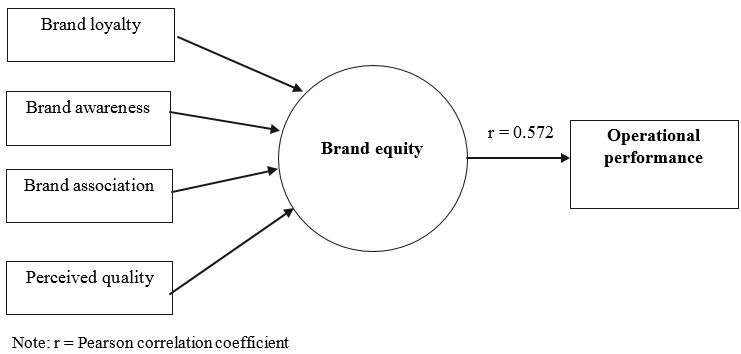
Firms in the Indian fast-moving consumer goods (FMCG) sector face a considerable challenge in quantifying brand equity. In this study, we analyse how the value of a company's brand affects the operational performance of enterprises operating in the Indian fast-moving consumer goods industry. This particular research study technique that takes both a descriptive and an exploratory one. The findings suggest that there is some sort of link. between the value of the brand and the operational performance of the company. The consequences that this will have in the findings indicate that good management of brand equity is essential for enhancing a company's operational success.
Downloads
References
A. H. Tolba, & S. S. Hassan. (2009). A management strategy for tying customer perceptions of brand value to that value's actual market performance. Journal of Product & Brand Management, 18(5), 356–366.
A. Kirmani, & V. A. Zeithaml. (1993). Branding, consumer confidence, and advertising. Brand equity and advertising: Advertising's function in creating powerful brands. edited by David A. Aaker and Alan L. Biel (pp. 143-162). Lawrence Erlbaum Associates, Hilldale, NJ.
A. Sharma, B. Mittal, & W. Lassar. (1995). Understanding how to quantify customer loyalty to a brand. Journal of Consumer Marketing, 11-19.
Ananda Sarangapani, & Tharaka Mamatha. (2008). Examining the habits and brand loyalty of rural consumers in relation to a subset of fast-moving consumer goods. Journal of Brand Management at the International University of the Philippines, 5(3), 22-61.
Baldauf, K. S. Cravens, & G. Binder. (2003). Evidence from firms along the value chain shows that brand equity management has repercussions on performance. Journal of Product and Brand Management, 12(4), 220–236.
D. A. Aaker. (1991). Managing brand equity is making the most of a company's investment in its name. The Free Press of New York.
D. A. Aaker. (1996). Creating reputable brands. The Free Press of New York.
Dodds, W. B., Monroe, K. B., & Grewal, D. (1991). Customer decision-making is influenced by price, brand, and location. Journal of Marketing Research, 28, 307-319.
E. Atilgan, S. Aksoy, & S. Akinci. (2005). Brand equity determinants in the Turkish beverage market: A verification strategy. Journal of Business Research, 23(3), 237-248.
I. Buil, L. de Chernatony, & E. Martinez. (2008). The consumer-based brand equity scale is validated for use across international samples. Journal of Product and Brand Management, 17(6), 384-392.
K. Agnihotri, D. Kamidi, R. Ranjan, M. Vasudevan Unni, R. V. Babu K, & N. Jayanthi. (2024). Analyzing customer psychological and behavioral attributes in corporate social responsibility in supply chain management using a multilayer perceptron approach. International Conference on Emerging Research in Computational Science (ICERCS), pp. 1-6. DOI: 10.1109/ICERCS63125.2024.10894805.
K. M. Nayak, R. K. K, S. D. Khetree, M. V. Unni, A. Vignesh, & S. Ramya. (2024). Fostering synergy: Exploring the intersection of operations and human resources management through an RF-SVM approach. 2nd International Conference on Intelligent Data Communication Technologies and Internet of Things (IDCIoT), pp. 947-953. DOI: 10.1109/IDCIoT59759.2024.10467998.
Karim Shaikh, K. A. Devi, P. Deshmukh, M. Rajaram, M. V. Unni, & A. Bhatt. (2024). Digital marketing strategy and consumer behavior analysis through deep Q-Network (DQN) Models. 4th International Conference on Mobile Networks and Wireless Communications (ICMNWC), pp. 1-6. DOI: 10.1109/ICMNWC63764.2024.10872145.
Keller, K. L. (1993). Understanding, evaluating, and controlling brand equity in the eyes of the buying public. Journal of Marketing, 57(1), 1-22.
Keller, K. L. (2003). Management of brand equity through strategic planning, evaluation, and administration of brand attributes. (2nd ed.). New Jersey: Prentice Hall.
Keller, K. L. (2011). A guide to developing powerful brands that are supported by loyal consumer bases, 3-38.
M. V. Unni. (2020 Apr). Does digital and social media marketing play a major role in consumer behaviour?. International Journal of Research in Engineering, Science and Management, 3(4), 272-278.
M. V. Unni, R. S, R. Kar, R. Bh, V. V, & J. M. Johnson. (2023). Effect of VR technological development in the age of AI on business human resource management. Second International Conference on Electronics and Renewable Systems (ICEARS), pp. 999-1004. DOI: 10.1109/ICEARS56392.2023.10085258.
Mackay, M. M., J. Romaniuk, & B. Sharp. (1997). A typology of brand equity research. Proceedings of the Australia and New Zealand Marketing Educators' Conference (ANZMAC), pp. 1146–57.
Mohan BC, & Sequeira AH. (2012). Brand value and organizational results: Developing a theoretical foundation. The Indian Journal of Business, 43(2), 5–10.
Morgan, N. A., & Rego, L. L. (2009). Strategies for managing a brand portfolio and the financial results of a company. Journal of Marketing, 73(January), 59-74.
Myers, A. C. (2003). Understanding the role of brand qualities in managing brand equity. Journal of Product and Brand Management, 12(1), 39–51.
N. Venkatraman, & V. Ramanujam. (1986). Analyzing different methods for gauging company performance in studies of strategic planning. Research in the Academy of Management, 11(4), 801–814.
N. Venkatraman, & V. Ramanujam. (1987). Method convergence in the measurement of economic performance of businesses. Journal of Management, 13(1), 109–122.
Norton, D. P., & R. S. Kaplan. (1996). Integrating the BSC into strategic planning.
Nunnally, J. (1978). The conceptualization of psychological measurement. McGraw-Hill.
Parameswaran, & Yaprak. (1987). Evaluation of consumer survey instruments in different countries. Journal of International Business Studies, 35–49.
Pinsonneault, A., & Kraemer, K. L. (1993). Evaluation of a survey research methodology used to the field of management information systems. Journal of Management Information Systems, 10(2), 75–105.
Robert G. Eccles. (1991). There is a manifesto for evaluating productivity. The Harvard Business Review, 69(January-February), 131-137.
Roll, M. (2009). Brand equity and other brand metrics. Available at: http://www.brandingstrategyinsider.com/2009/06/the-metricsof-branding.html#%20.Vjw%206FysbiHk.
S. E. Beatty, & L. R. Kahle. (1988). Different levels of importance for the connection between attitude and action. Journal of the Academy of Marketing Science, 1-10.
S. N. Silverman, D. E. Sprott, & V. J. Pascal. (1998). Attributing commercial success to consumer-generated brand equity. Consumer Research Advances 26, 352–358.
Simon, Christopher Joseph, & Michael W. Sullivan. (1993). A monetary method for gauging and analysing brand equity. Journal of Marketing Research, 12(1), 28-52.
Singh, D. P., Gupta, K., Singh, N., Unni, M. V., Jayasudha, S., & Chauhan, A. (2025). Enhancing enterprise human resource management: Predicting workers’ stress for improved workplace satisfaction using a hybrid deep transfer learning approach. CRC Press eBooks, pp. 328–333. https://doi.org/10.1201/9781003559115-55.
T. Ambler. (2003). How marketing affects profits. (2nd ed.). London: Pearson Education, Ltd.
Unni, M. V., & Menon U, S. (2020). Does the Indian education system require a paradigm shift? . International Journal for Science and Advance Research in Technology, 6(4), 695–699.
Vallette-Florence, P., Odin, Y., & N. Odin. (2001). An empirical analysis of the theoretical and practical facets of consumer brand loyalty. Journal of Business Research 53(2), 75-84.
Webster, F. E. (2000). Learn the interplay between retailers, customers, and distributors. Journal of the Academy of Marketing Science, 28(1), 17–23.
Yoo, & Donthu. (2001). Creating and verifying a multi-factor, consumer-based brand equity index. Journal of Business Research, 52(1), 1-14.
Yoo, Donthu, & Lee. (2000). Analysis of several aspects of the marketing mix and their effect on brand value. Academia of Marketing Science Journal, 28(2), 195-211.
Z. S. Rauf, M. Kathiravan, P. Vanitha, R. M. Kani, R. Sethumadhavan, & M. V. Unni. (2025). The role of HR in sustainable and ethical supply chain management using a residual neural network approach. International Conference on Intelligent Systems and Computational Networks (ICISCN), pp. 1-6, DOI: 10.1109/ICISCN64258.2025.10934406.
Published
How to Cite
Issue
Section
License
Copyright (c) 2025 Rudresh S, Manu Vasudevan Unni

This work is licensed under a Creative Commons Attribution 4.0 International License.
Research Articles in 'International Journal of Engineering and Management Research' are Open Access articles published under the Creative Commons CC BY License Creative Commons Attribution 4.0 International License http://creativecommons.org/licenses/by/4.0/. This license allows you to share – copy and redistribute the material in any medium or format. Adapt – remix, transform, and build upon the material for any purpose, even commercially.