Comparative Analysis of Statistical and Machine Learning Models for Diabetes Prediction Using Healthcare Data
DOI:
https://doi.org/10.31033/IJEMR/16.3.2026.1924Keywords:
Diabetes Mellitus, Healthcare Analytics, Logistic Regression, Random Forest, Machine Learning, Predictive ModelingAbstract
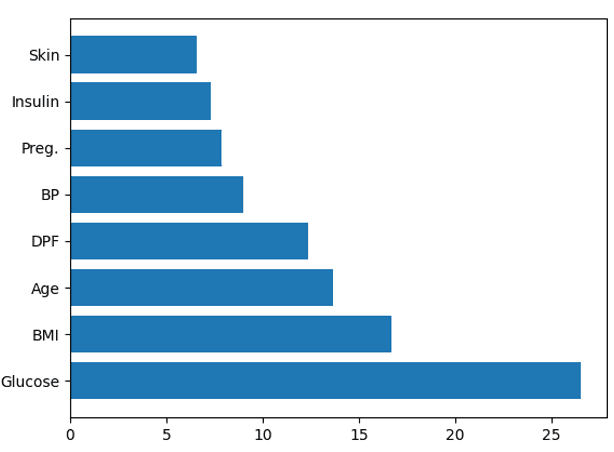
Diabetes mellitus is a chronic metabolic disorder that has become a major global health challenge. Early identification of high-risk individuals is essential for preventing severe complications and reducing healthcare costs. This study aims to identify significant risk factors associated with diabetes and evaluate the predictive performance of statistical and machine learning models using healthcare data. The dataset consists of 2,768 patient records with clinical and demographic variables including pregnancies, glucose, blood pressure, skin thickness, insulin, body mass index (BMI), diabetes pedigree function, and age. Descriptive statistics, correlation analysis, logistic regression, and Random Forest classification were employed. Logistic regression identified glucose, BMI, age, pregnancies, and diabetes pedigree function as significant predictors of diabetes. The Random Forest model achieved superior predictive performance compared to logistic regression. Feature importance analysis indicated that glucose level was the most influential predictor. The findings demonstrate the effectiveness of machine learning techniques for diabetes risk prediction and healthcare decision support.
Downloads
References
Afsaneh, E., Sharifdini, A., Ghazzaghi, H., & Zarei Ghobadi, M. (2022). Recent applications of machine learning and deep learning models in the prediction, diagnosis, and management of diabetes: A comprehensive review. Diabetology & Metabolic Syndrome, 14(1), 196. https://doi.org/10.1186/s13098-022-00969-9
Olusanya, M. O., Ogunsakin, R. E., Ghai, M., & Adeleke, M. A. (2022). Accuracy of machine learning classification models for the prediction of Type 2 Diabetes Mellitus: A systematic survey and meta-analysis approach. International Journal of Environmental Research and Public Health, 19(21), 14280. https://doi.org/10.3390/ijerph192114280
Oikonomou, E. K., & Khera, R. (2023). Machine learning in precision diabetes care and cardiovascular risk prediction. Cardiovascular Diabetology, 22(259). https://doi.org/10.1186/s12933-023-01985-3
Prendin, F., Pavan, J., Cappon, G., Del Favero, S., Sparacino, G., & Facchinetti, A. (2023). The importance of interpreting machine learning models for blood glucose prediction in diabetes: An analysis using SHAP. Scientific Reports, 13, 16865. https://doi.org/10.1038/s41598-023-44155-x
Liu, K., Li, L., Ma, Y., Jiang, J., Liu, Z., Ye, Z., Liu, S., Pu, C., Chen, C., & Wan, Y. (2023). Machine learning models for blood glucose level prediction in patients with diabetes mellitus: Systematic review and network meta-analysis. JMIR Medical Informatics, 11, e47833.
Tasin, M., et al. (2023). Diabetes prediction using machine learning and explainable AI techniques. Healthcare Technology Letters, 10(1–2), 1–10. https://doi.org/10.1049/HTL2.12039
Ganguly, R., & Singh, D. (2023). Explainable Artificial Intelligence (XAI) for the prediction of diabetes management: An ensemble approach. International Journal of Advanced Computer Science and Applications, 14(7). https://doi.org/10.14569/IJACSA.2023.0140717
Sonko, S., Lamya, F., Alzubaidi, M., Alam, T., Shah, Z., & Househ, M. (2023). Predicting long-term Type 2 diabetes with artificial intelligence: A scoping review. Studies in Health Technology and Informatics. https://doi.org/10.3233/SHTI230582
Ahmed, M., et al. (2023). A robust predictive diagnosis model for diabetes mellitus using Shapley-incorporated machine learning algorithms. Healthcare Analytics, 3, 100166. https://doi.org/10.1016/j.health.2023.100166
Hosmer, D. W., Lemeshow, S., & Sturdivant, R. X. (2013). Applied logistic regression. (3rd ed.). Wiley.
James, G., Witten, D., Hastie, T., & Tibshirani, R. (2021). An introduction to statistical learning. (2nd ed.). Springer.
Random Forests Breiman, L. (2001). Random forests. Machine Learning, 45(1), 5–32.
Chen, T., & Guestrin, C. (2016). XGBoost: A scalable tree boosting system. In Proceedings of the 22nd ACM SIGKDD International Conference on Knowledge Discovery and Data Mining, pp. 785–794.
Lundberg, S. M., & Lee, S. I. (2017). A unified approach to interpreting model predictions. Advances in Neural Information Processing Systems, 30, 4765–4774.
Published
How to Cite
Issue
Section
License
Copyright (c) 2026 Dr. Esha Raffie B.

This work is licensed under a Creative Commons Attribution 4.0 International License.
Research Articles in 'International Journal of Engineering and Management Research' are Open Access articles published under the Creative Commons CC BY License Creative Commons Attribution 4.0 International License http://creativecommons.org/licenses/by/4.0/. This license allows you to share – copy and redistribute the material in any medium or format. Adapt – remix, transform, and build upon the material for any purpose, even commercially.


