Biodegradable Plastics from Household Ingredients: A Sustainable Alternative to Conventional Polymers
DOI:
https://doi.org/10.5281/zenodo.15775579Keywords:
Biodegradable Plastic, Corn Starch, Glycerol, Polyvinyl Alcohol, Green Chemistry, SustainabilityAbstract
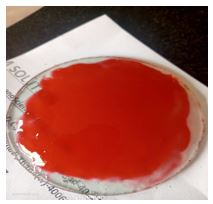
Plastic pollution has become a critical environmental issue due to the non-biodegradable nature of conventional plastics. This study explores the development of biodegradable plastic using natural, non-toxic components—corn starch, glycerol, vinegar (acetic acid), and polyvinyl alcohol (PVA). The research aimed to assess the feasibility, physical properties, and biodegradability of the synthesized plastic. Results showed that the method is simple, cost-effective, and environmentally beneficial. The plastic was flexible, partially transparent, and soluble in hot water. The addition of PVA improved structural integrity. The study underscores the potential for community-based, educational-level plastic innovation as part of broader sustainability efforts.
Downloads
References
Andrady, A. L., & Neal, M. A. (2009). Applications and societal benefits of plastics. Philosophical Transactions of the Royal Society B: Biological Sciences, 364(1526), 1977–1984. https://doi.org/10.1098/rstb.2008.0304.
Fekete, T., Szabó, T., Földes, E., & Nagy, Z. K. (2023). Development of starch-based biodegradable packaging materials. Polymers, 15(2), 458. https://doi.org/10.3390/polym15020458.
Kumar, S., Pandey, M., & Sharma, S. (2023). Recent advances in biodegradable polymers: Challenges and prospects. Journal of Polymers and the Environment, 31, 1000–1012. https://doi.org/10.1007/s10924-023-02777-y.
UNEP (United Nations Environment Programme). (2023). Turning off the Tap: How the world can end plastic pollution and create a circular economy. https://www.unep.org/resources/report/turning-tap.
Wright, S. L., & Kelly, F. J. (2017). Plastic and human health: A micro issue?. Environmental Science & Technology, 51(12), 6634–6647. https://doi.org/10.1021/acs.est.7b00423.
Zhang, T., Chen, Y., & Liu, Y. (2022). Microplastics and their impacts on human health: Knowledge, risks, and mitigation. Science of the Total Environment, 829, 154457. https://doi.org/10.1016/j.scitotenv.2022.154457.
Avérous, L., & Pollet, E. (2012). Environmental silicate nano-biocomposites. Springer. https://doi.org/10.1007/978-1-4614-0899-4.
Geyer, R., Jambeck, J. R., & Law, K. L. (2017). Production, use, and fate of all plastics ever made. Science Advances, 3(7), e1700782. https://doi.org/10.1126/sciadv.1700782.
Kumar, S., Gupta, D., & Sharma, M. (2020). Bioplastics from starch: A green alternative. International Journal of Scientific Research in Science and Technology, 7(5), 79-83. https://doi.org/10.32628/IJSRST207515.
Nanda, S., & Berruti, F. (2021). Biodegradable plastics: Current trends and future perspectives. Environmental Chemistry Letters, 19, 2413–2435. https://doi.org/10.1007/s10311-021-01189-w.
Rochman, C. M., et al. (2013). Policy: Classify plastic waste as hazardous. Nature, 494(7436), 169-171. https://doi.org/10.1038/494169a.
Tharanathan, R. N. (2003). Biodegradable films and composite coatings: Past, present and future. Trends in Food Science & Technology, 14(3), 71-78. https://doi.org/10.1016/S0924-2244(02)00280-7.
Thompson, R. C., et al. (2009). Plastics, the environment and human health. Philosophical Transactions of the Royal Society B, 364(1526), 2153–2166. https://doi.org/10.1098/rstb.2009.0053.
Wang, Y., Wang, L., & Wang, Y. (2001). Effects of PVA on the structure and properties of starch-based biodegradable films. Carbohydrate Polymers, 47(2), 137-143. https://doi.org/10.1016/S0144-8617(01)00139-9.
Published
How to Cite
Issue
Section
License
Copyright (c) 2025 Neelam Lohakare, Maheshwari Zirpe, Deepika Hasija, Rupali Nagarekar, Deepak Gaikwad, Fiza Khan, Namra Sayed, Rehan Mulla, Fareeha Parkar, Sarthak Rathod

This work is licensed under a Creative Commons Attribution 4.0 International License.
Research Articles in 'International Journal of Engineering and Management Research' are Open Access articles published under the Creative Commons CC BY License Creative Commons Attribution 4.0 International License http://creativecommons.org/licenses/by/4.0/. This license allows you to share – copy and redistribute the material in any medium or format. Adapt – remix, transform, and build upon the material for any purpose, even commercially.