The Impact of Artificial Intelligence on Advertising and Marketing Strategies: A Study on Personalization, Consumer Behavior, and Brand Engagement
DOI:
https://doi.org/10.5281/zenodo.15826606Keywords:
Artificial Intelligence (AI), Advertising, Marketing Strategies, Consumer Behavior, ChatbotsAbstract
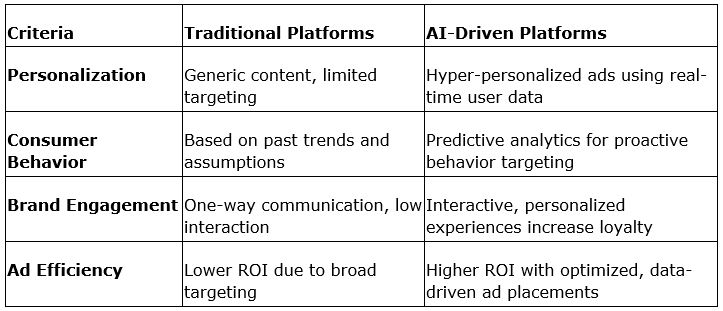
Artificial Intelligence (AI) is rapidly transforming the landscape of advertising and marketing, reshaping how brands connect with consumers. This paper explores the profound impact of AI technologies on the creation, delivery, and personalization of marketing content. With advanced algorithms, machine learning, and predictive analytics, companies can now tailor advertisements to individual preferences, enhancing user experience and boosting engagement. The study investigates how AI-driven personalization influences marketing strategies and redefines the traditional customer journey.
Furthermore, the research delves into changes in consumer behavior triggered by AI integration. Consumers today expect more relevant, timely, and personalized interactions, and AI enables brands to meet these expectations with unprecedented precision. By analyzing real-time data and learning from consumer interactions, AI tools help marketers predict needs, personalize offers, and create more meaningful connections. The study highlights the dynamic shift in consumer expectations and the necessity for brands to adapt their communication strategies accordingly.
Finally, this paper examines AI’s role in enhancing brand engagement and loyalty. Through chatbots, virtual assistants, and automated customer service, brands maintain continuous interaction with consumers, building stronger relationships. However, it also addresses the challenges, including ethical considerations, data privacy concerns, and the potential loss of human creativity. The findings offer insights into the balance companies must achieve between technological efficiency and authentic human connection in their advertising and marketing efforts.
Downloads
References
A. Kietzmann, M. Paschen, & T. Kietzmann. (2019). Artificial intelligence in advertising: How marketers can leverage AI. Journal of Advertising Research, 59(3), 263–267.
K. Davenport, A. Guha, & A. Grewal. (2020). How artificial intelligence will change the future of marketing. Journal of the Academy of Marketing Science, 48(1), 24–42.
B. Jarek, & M. Mazurek. (2018). Marketing and artificial intelligence. Management, 22(1), 68–79.
J. Bughin, B. Catlin, M. Hirt, & P. Willmott. (2017). Artificial Intelligence: The next digital frontier?. McKinsey Global Institute Report, pp. 12–18.
C. Wirth. (2018). Hello marketing, what can artificial intelligence help you with?. International Journal of Market Research, 60(5), 435–438.
S. Dzyabura, & R. Hauser. (2011). Recommending products using opinion mining of online customer reviews. Marketing Science, 30(2), 161–173.
Y. Chen, Q. Wang, & J. Xie. (2019). Online advertising strategy: A literature review. Journal of Business Research, 95, 128–143.
Published
How to Cite
Issue
Section
License
Copyright (c) 2025 Sneha Naik, Reet Mayuresh Thule, Arpita Sagar Nayak

This work is licensed under a Creative Commons Attribution 4.0 International License.
Research Articles in 'International Journal of Engineering and Management Research' are Open Access articles published under the Creative Commons CC BY License Creative Commons Attribution 4.0 International License http://creativecommons.org/licenses/by/4.0/. This license allows you to share – copy and redistribute the material in any medium or format. Adapt – remix, transform, and build upon the material for any purpose, even commercially.


