FOMO and Impulse Buying: A Behavioral Study of Gen Z in the Fashion Market
DOI:
https://doi.org/10.5281/zenodo.15833671Keywords:
Fear of Missing Out (FOMO), Digital Transformation, E-commerce, Impulse Buying, Consumer Behavior, Generation Z (Gen Z)Abstract
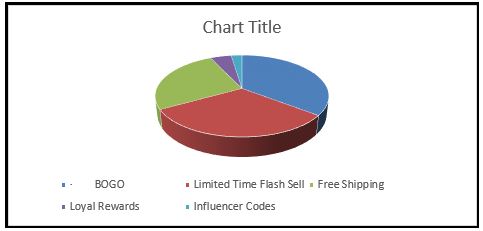
Easy availability of online platforms has led to an increase in the number of suppliers and competition between businesses. To attract customers, companies have used the fear of missing out (FOMO) effect through advertising messages that stimulate the fear of missing out in each individual, prompting them to make quick purchasing decisions. In recent years, the fashion industry has undergone a significant transformation, driven largely by the rise of digital technology and social media. Among the most influential consumer segments in this landscape is Generation Z (Gen Z). Gen Z means a person born between the mid-1990s and early 2010s. This generation is characterized by its digital connectivity, with a strong affinity for online shopping and social media engagement. As a result, understanding their purchasing behavior, particularly in the context of impulse buying, has become increasingly important for fashion brands and marketers. Additionally, promotional offers play a crucial role in driving impulse purchases. Retailers and fashion brands frequently use strategic discounting, flash sales, limited-time offers, and exclusive deals to create a sense of urgency and scarcity. These marketing tactics leverage the psychological principle of loss aversion, where consumers feel compelled to act quickly to avoid missing out on a good deal. For brands and retailers, there is a significant opportunity to shift away from reliance on aggressive discounting and short-term sales tactics. Instead, they can focus on building long-term relationships with customers by offering rewards for sustainable shopping habits and promoting mindful consumption. Loyalty programs that incentivize conscious purchases, alongside efforts to highlight the environmental impact of fast fashion, can encourage Gen Z to buy with purpose and awareness.
Downloads
References
Bhatia, K., & Khurana, R. (2020). Perceived scarcity and impulse buying in fashion. Journal of Behavioral Economics in Retail, 8(3), 45–60.
Ghosh, A. (2021). The emotional impact of flash sales on Gen Z. Journal of Consumer Psychology & Behavior, 14(2), 89–102.
Kumar, R. (2019). Social comparison and FOMO in online shopping among Gen Z. Journal of Digital Consumer Research, 7(4), 134–150.
Mehta, S., & Sharma, P. (2021). The influence of time-sensitive offers on Gen Z fashion shoppers. Indian Journal of Digital Retailing, 11(2), 98–110.
Nguyen, T., & Tran, L. (2019). Offer framing and impulse purchases: A study of Gen Z in fashion retail. Journal of Retail Marketing, 10(1), 56–70.
Patel, R., & Desai, M. (2020). Influence of social media and offers on Gen Z’s fashion choices. International Journal of Marketing Trends, 12(3), 112–125.
Patel, S., & Shah, A. (2021). The power of urgency in digital fashion retail. Journal of Online Retail & Trends, 15(3), 142–155.
Reddy, N. (2021). Fear of missing out in digital fashion marketing: A Gen Z perspective. Journal of Digital Commerce, 13(1), 101–115.
Sengupta, I., & Agarwal, P. (2020). Gamification and impulse buying in fashion e-commerce: A Gen Z analysis. International Journal of Retail Innovations, 9(4), 120–134.
Sharma, D., & Mehra, N. (2020). Price sensitivity and FOMO in fashion purchases among Gen Z. Journal of Consumer Psychology & Pricing, 5(2), 67–80.
Singh, V., & Verma, A. (2020). Flash sales and impulse buying: Gen Z's behavioral patterns. International Journal of Fashion Marketing, 9(2), 75–88.
Tandon, R., & Soni, K. (2019). Influence of influencer marketing on fashion impulse purchases among Gen Z. Journal of Interactive Marketing & Media, 6(1), 22–36.
https://exsys.iocspublisher.org/index.php/JMAS/article/view/392.
https://repository.ubaya.ac.id/43269/1/Impulsive%20buying.pdf.
https://www.multiresearchjournal.com/admin/uploads/archives/archive-1697779065.pdf.
www.google.com.
Published
How to Cite
Issue
Section
License
Copyright (c) 2025 Pooja Prasad Oak, Anaya Aditya Markandeya

This work is licensed under a Creative Commons Attribution 4.0 International License.
Research Articles in 'International Journal of Engineering and Management Research' are Open Access articles published under the Creative Commons CC BY License Creative Commons Attribution 4.0 International License http://creativecommons.org/licenses/by/4.0/. This license allows you to share – copy and redistribute the material in any medium or format. Adapt – remix, transform, and build upon the material for any purpose, even commercially.