Estimating the Direction and Magnitude of Substitution Effects in MLB Event Attendance
DOI:
https://doi.org/10.31033/IJEMR/16.1.2026.1840Keywords:
Substitution Effect, Sports Economics, Louis-Schmeling Paradox, Temporal Substitution Effect, Team Loyalty Substitution Effect, Team Performance Substitution EffectAbstract
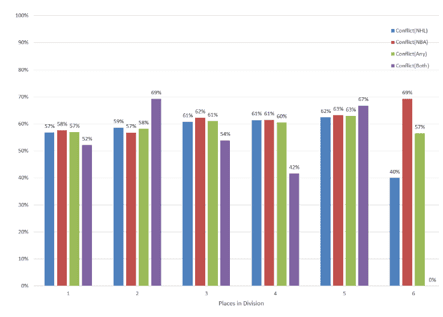
We estimate the magnitude of the negative impacts (or substitution effects) caused by NHL or NBA games with schedule conflicts on the attendance demand of MLB games. In particular, we aggregate such substitution effects over three different factors such as temporal aggregation factors (e.g., years and days of the week), team aggregation factor (e.g., each MLB team), and team performance aggregation factor (e.g., each MLB team’s performance). Overall, we observe that NHL and NBA games that have schedule conflicts with MLB games more significantly negatively impact the attendance on MLB games during the weekdays (in particular, Thursday and Wednesday) than MLB games during the weekend. We also observe that MLB teams in high standings suffer less from negative substitution effects than MLB teams in low standings in the division. In particular, when MLB teams are in a losing streak, spectators show their deepest disappointments in their teams and avoid to attend MLB games in stadium.
Downloads
References
Borland, J. & MacDonald, R. (2003). Demand for sport. Oxford Review of Economic Policy, 19(4), 478–502.
Breiman, L. (1996). Bagging predictors. Machine Learning, 24, 123-140.
Breiman, L. (2001). Random forests. Machine Learning, 45(1), 5-32.
Buraimo, B. & Simmons, R. (2008). Do sports fans really value uncertainty of outcome? Evidence from the English Premier League. International Journal of Sport Finance, 3(3), 146–155.
Buraimo, B., Forrest, D., & Simmons, R. (2009). Insights for clubs from modelling match attendance in football. Journal of Operational Research Society, 60(2), 147–155.
Coates, D. & Humphreys, B.R. (2012). Game attendance and outcome uncertainty in the National Hockey League. Journal of Sports Economics, 13(4), 364–377.
Cox, A. (2018). Spectator demand, uncertainty of results, and public interest: Evidence from the English Premier League. Journal of Sports Economics, 19(1), 3–30.
Czarnitzki, D. & Stadtmann, G. (2002). Uncertainty of outcome versus reputation: Empirical evidence for the first German football division. Empirical Economics, 27(1), 101–112.
Dobson S. & Goddard, J. (2011). The economics of football. Cambridge, UK: Cambridge University Press.
Dubin, J.A. (2001). The demand for NFL football. In: Empirical Studies in Applied Economics. Springer, Boston, MA, pp. 31–49.
Forbes & Statista. (March 28, 2024). Major League Baseball total league revenue from 2001 to 2023. In: Statista. Retrieved January 13, 2025, from https://www.statista.com/statistics/193466/total-league-revenue-of-the-mlb-since-2005/
Forrest, D. & Simmons, R. (2002). Outcome uncertainty and attendance demand in sport: The case of English soccer. Journal of the Royal Statistical Society: Series D, 51(2), 229–241.
Forrest, D. & Simmons, R. (2006). New issues in attendance demand: The case of the English Football League. Journal of Sports Economics, 7(3), 247–266.
Freund, Y. & Schapire, R. E. (1995). A decision-theoretic generalization of on-line learning and an application to boosting. Lecture Notes in Computer Science, Berlin, Heidelberg: Springer Berlin Heidelberg, pp. 23–37.
Garcıa, J. & Rodrıguez, P. (2002). The determinants of football match attendance revisited: Empirical evidence from the Spanish Football League. Journal of Sports Economics, 3(1), 18–38.
Hart, R., Hutton, J., & Sharot, T. (1975). A statistical analysis of association football attendances. Journal of the Royal Statistical Society: Series C, 24(1), 17–27.
King, B. E., Rice, J. L., & Vaughan, J. (2018). Using machine learning to predict National Hockey League average home game attendance, Journal of Prediction Markets, 12(2), 85-98.
Knowles, G., Sherony, K., & Haupert, M. (1992). The demand for Major League Baseball: A test of the uncertainty of outcome hypothesis. The American Economist, 36(2), 72–80.
Lemke, R.J., Leonard, M., & Tlhokwane, K. (2010). Estimating attendance at Major League Baseball games for the 2007 season. Journal of Sports Economics, 11(3), 316–348.
Madalozzo, R. & Villar, R. (2009). Brazilian football: What brings fans to the game? Journal of Sports Economics, 10(6), 639–650.
Maszczyk, A., Zajac, A., & Ryguła, I. (2011). A neural network model approach to athlete selection. Sports Engineering, 13(2), 83–93.
McCullagh, J. (2010). Data mining in sport: A neural network approach. International Journal of Sports Science and Engineering, 4(3), 131–138.
Martins, M.A. & Cro, S. (2018). The demand for football in Portugal: New insights on outcome uncertainty. Journal of Sports Economics, 19(4), 473–497.
Neale, W.C. (1964). The peculiar economics of professional sports: A contribution to the theory of the firm in sporting competition and in market competition. The Quarterly Journal of Economics, 78(1), 1–14.
Pang, Y. & Wang, F. (2024). Forecasting stadium attendance using machine learning models: A case of the National Football League. Studia Sportiva, 18(2), Publisher: Masaryk University Press.
Park, J., Cho, J., Gang, A.C., Lee, H.-W., & Pedersen, P.M. (2024). Machine learning prediction of factors affecting Major League Baseball (MLB) game attendance: Algorithm comparisons and macroeconomic factor of unemployment. International Journal of Sports Marketing and Sponsorship, 25(2), 382-395.
Pawlowski, T. & Anders, C. (2012). Stadium attendance in German professional football—the (Un) Importance of uncertainty of outcome reconsidered. Applied Economics Letters, 19(16), 1553–1556.
Reilly, B. (2015). The demand for league of Ireland football. Economic and Social Review, 46(4), 485–509.
Rottenberg, S. (1956). The baseball players’ labor market. Journal of Political Economy, 64(3), 242–258.
Sahin, M. & Erol, R. (2017). A comparative study of neural networks and ANFIS for forecasting attendance rate of soccer games. Mathematical and Computational Applications, 22(4), 43–54
Sahin, M. & Ucar, M. (2022). Prediction of sports attendance: A comparative analysis. Proceedings of the Institution of Mechanical Engineers, Part P: Journal of Sports Engineering and Technology, 236(2), 06-123.
Serrano, R., Garcıa-Bernal, J., Fernandez-Olmos, M., & Espitia-Escuer, M.A. (2015). Expected quality in european football attendance: Market value and uncertainty reconsidered. Applied Economics Letters, 22(13), 1051–1054.
Strnad, D., Nerat, A., & Kohek, S. (2017). Neural network models for group behavior prediction: A case of soccer match attendance. Neural Computing and Applications, 28(2), 287–300.
Varian, H. (2014). Intermediate microeconomics. (9th ed.). New York: W.W. Norton.
Villa, G., Molina, I., & Fried, R. (2011). Modeling attendance at Spanish professional football league. Journal of Applied Statistics, 38(6), 1189–1206.
Wallrafen, T., Nalbantis, G., & Pawlowski, T. (2022). Competition and fan substitution between professional sports leagues. Review of Industrial Organization, 61, 21–43.
Published
How to Cite
Issue
Section
License
Copyright (c) 2026 Yong Seog Kim, Clay Moffitt

This work is licensed under a Creative Commons Attribution 4.0 International License.
Research Articles in 'International Journal of Engineering and Management Research' are Open Access articles published under the Creative Commons CC BY License Creative Commons Attribution 4.0 International License http://creativecommons.org/licenses/by/4.0/. This license allows you to share – copy and redistribute the material in any medium or format. Adapt – remix, transform, and build upon the material for any purpose, even commercially.